Why Choosing the Right Place for Your Savings Matters
Imagine your car suddenly breaks down on the way to work, or you receive an unexpected hospital bill. These situations often happen without warning and require immediate cash. Now imagine that every Ringgit you have saved is locked away inside a Fixed Deposit. Although you have money, accessing it quickly may not be convenient and could even reduce the interest you earn through early withdrawal.
This is one of the most common mistakes people make when starting their financial journey. Many assume that putting every Ringgit into a Fixed Deposit is the smartest way to grow their savings because it offers higher interest than a regular savings account. However, savings should not all serve the same purpose.
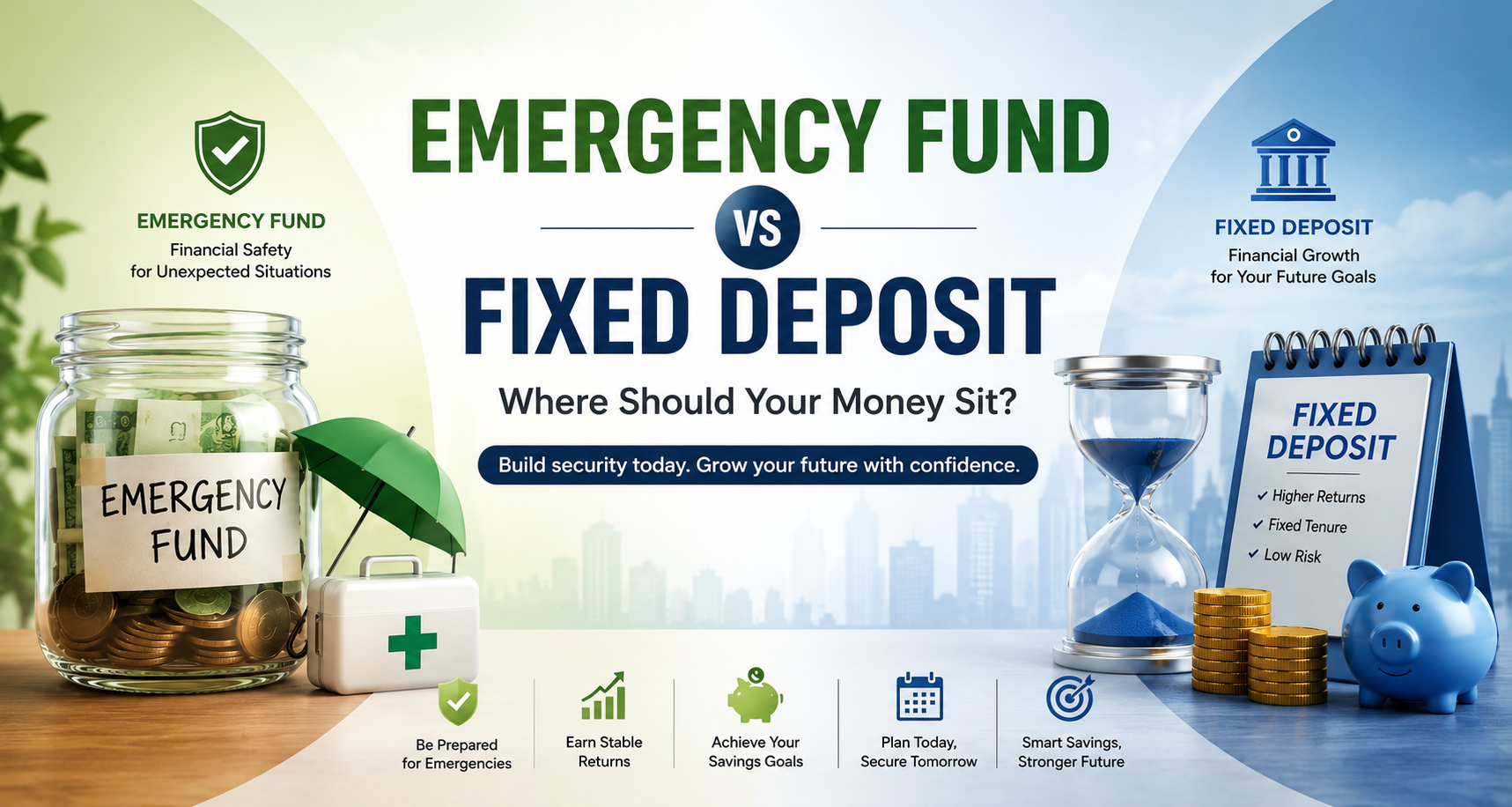
An Emergency Fund is designed to protect you during unexpected situations, while a Fixed Deposit helps preserve and grow money that you do not need immediately. Instead of choosing one over the other, the best financial strategy is to understand when each should be used.
In this guide, you'll learn the differences between an Emergency Fund and a Fixed Deposit, discover how much emergency savings you should have, and explore a practical savings strategy that balances financial security with long-term wealth building.
1. What Is an Emergency Fund?
An Emergency Fund is money set aside specifically for unexpected expenses. Unlike money used for shopping, holidays, or entertainment, this fund should only be used when genuine emergencies occur.
Think of it as your personal financial safety net. Life is unpredictable, and unexpected expenses can happen at any time. Having emergency savings means you won't need to rely on credit cards, personal loans, or borrow money from family and friends during difficult situations.
Your Emergency Fund can be used for:
- Medical emergencies
- Unexpected hospital expenses
- Car repairs
- Home maintenance or repairs
- Family emergencies
- Job loss or temporary loss of income
- Essential living expenses during difficult times
Financial experts generally recommend saving between three to six months of essential living expenses. If your monthly expenses are RM2,500, your emergency fund should ideally be between RM7,500 and RM15,000.
Keep your Emergency Fund in a savings account or another highly liquid account where you can access your money quickly whenever an emergency happens.
2. What Is a Fixed Deposit?
A Fixed Deposit (FD) is a savings product offered by banks that allows you to deposit money for a fixed period in exchange for a guaranteed interest rate. During the selected tenure, your money remains locked until the maturity date.
Because banks know they can keep your money for a specific period, they usually offer higher interest rates than ordinary savings accounts. This makes Fixed Deposits a popular choice for conservative savers who want stable returns with relatively low risk.
However, the biggest disadvantage is liquidity. If you withdraw your money before the maturity date, you may receive reduced interest or lose interest earnings entirely, depending on your bank's terms and conditions.
Fixed Deposits are best for:
- Long-term savings
- Medium-term financial goals
- Money you will not need immediately
- Conservative investors seeking guaranteed returns
- Wealth preservation
While a Fixed Deposit can be an excellent financial planning tool, it should not replace your emergency savings. Building an Emergency Fund first ensures that unexpected events do not force you to withdraw your Fixed Deposit early and sacrifice potential returns.
3. Emergency Fund vs Fixed Deposit
Although both an Emergency Fund and a Fixed Deposit are important financial tools, they are designed for different purposes. Understanding the differences helps you decide where your money should be kept based on your financial goals and circumstances.
| Emergency Fund | Fixed Deposit |
|---|---|
| Easy access to cash | Money is locked for a selected tenure |
| Lower returns | Higher guaranteed returns |
| Used for emergencies | Used for planned savings |
| High liquidity | Lower liquidity |
| Financial safety net | Wealth preservation and growth |
The comparison above clearly shows that an Emergency Fund prioritises accessibility, while a Fixed Deposit focuses on growing your savings over time. Rather than viewing them as competing options, think of them as complementary parts of a healthy financial plan.
If all your savings are locked inside a Fixed Deposit, an unexpected emergency could force you to withdraw early and lose part of your interest earnings.
4. When Should You Use Each?
Deciding where to keep your money depends on your current financial situation. Ask yourself one simple question: "Will I need this money anytime soon?"
Choose an Emergency Fund if:
- You have not saved 3–6 months of living expenses.
- Your income is irregular or unpredictable.
- You want immediate access to your money.
- You want peace of mind during emergencies.
- You are just beginning your financial journey.
Choose a Fixed Deposit if:
- You already have a fully funded Emergency Fund.
- You will not need the money in the near future.
- You prefer stable and guaranteed returns.
- You are saving for medium- or long-term goals.
- You want a low-risk savings option.
Your Emergency Fund protects your present, while your Fixed Deposit helps build your future. Both are important, but your emergency savings should always come first.
5. A Smart Savings Strategy
Instead of putting every Ringgit into one place, consider dividing your monthly savings according to your financial priorities. This balanced approach gives you both financial security and opportunities for long-term growth.
Example monthly savings plan (RM1,000 total):
- RM700 → Emergency Fund
- RM300 → Fixed Deposit
After your Emergency Fund is complete, you can shift the balance:
- RM200 → Maintain your Emergency Fund
- RM800 → Fixed Deposit or other long-term investments
Building wealth is not about choosing one savings option over another. The smartest savings strategy combines both tools, allowing you to stay financially prepared today while growing your money for tomorrow.
6. Common Savings Mistakes to Avoid
Building healthy financial habits is not only about saving money—it is also about avoiding common mistakes that can slow down your financial progress.
- Putting every Ringgit into Fixed Deposits — locking all your savings away means you may struggle to access money during emergencies.
- Having no emergency savings — unexpected expenses could force you to rely on loans or credit cards.
- Spending emergency funds on wants — emergency savings should only be used for genuine emergencies, not holidays, shopping, gadgets, or entertainment.
- Forgetting to review savings goals — review your savings goals at least once a year and adjust them whenever necessary.
7. How LoNeX Helps You Manage Your Savings
Building an Emergency Fund and growing your savings through Fixed Deposits become much easier when you regularly monitor your financial progress. Rather than guessing where your money goes each month, you can make informed financial decisions using accurate information.
LoNeX is designed to support everyday money management by helping users stay organised and focused on their financial goals:
- Track savings goals — create and monitor Emergency Fund and long-term savings targets.
- Monitor income and expenses — understand your monthly cash flow and identify areas where you can save more.
- View your overall financial position — see how savings, expenses, and income work together.
- Stay on track — plan for both short-term emergencies and long-term goals with confidence.
Frequently Asked Questions
What is an Emergency Fund?
An Emergency Fund is money reserved for unexpected expenses such as medical emergencies, car repairs, job loss, or urgent home maintenance.
How much Emergency Fund should I have?
Most financial experts recommend saving between three and six months of your essential living expenses.
Is a Fixed Deposit better than a savings account?
A Fixed Deposit generally offers higher interest rates than a savings account, but your money is locked for a fixed period.
Can I use my Fixed Deposit as an Emergency Fund?
It is not recommended because early withdrawal may reduce your interest earnings and accessing the money may take longer.
Should I build an Emergency Fund before investing?
Yes. Having an Emergency Fund provides financial security and prevents you from selling investments or borrowing money during emergencies.
Start Building a Stronger Financial Future Today
The best financial plan isn't choosing between an Emergency Fund and a Fixed Deposit—it is knowing when to use each. Build your financial safety net first, then let your money grow with confidence.