I've noticed that a lot of people think managing money means spending hours creating complicated Excel spreadsheets. Honestly, that's one of the biggest reasons many people never start tracking their finances in the first place.
The good news? You don't need advanced spreadsheets or accounting skills to understand where your money is going.
1. Understand What Cash Flow Really Means
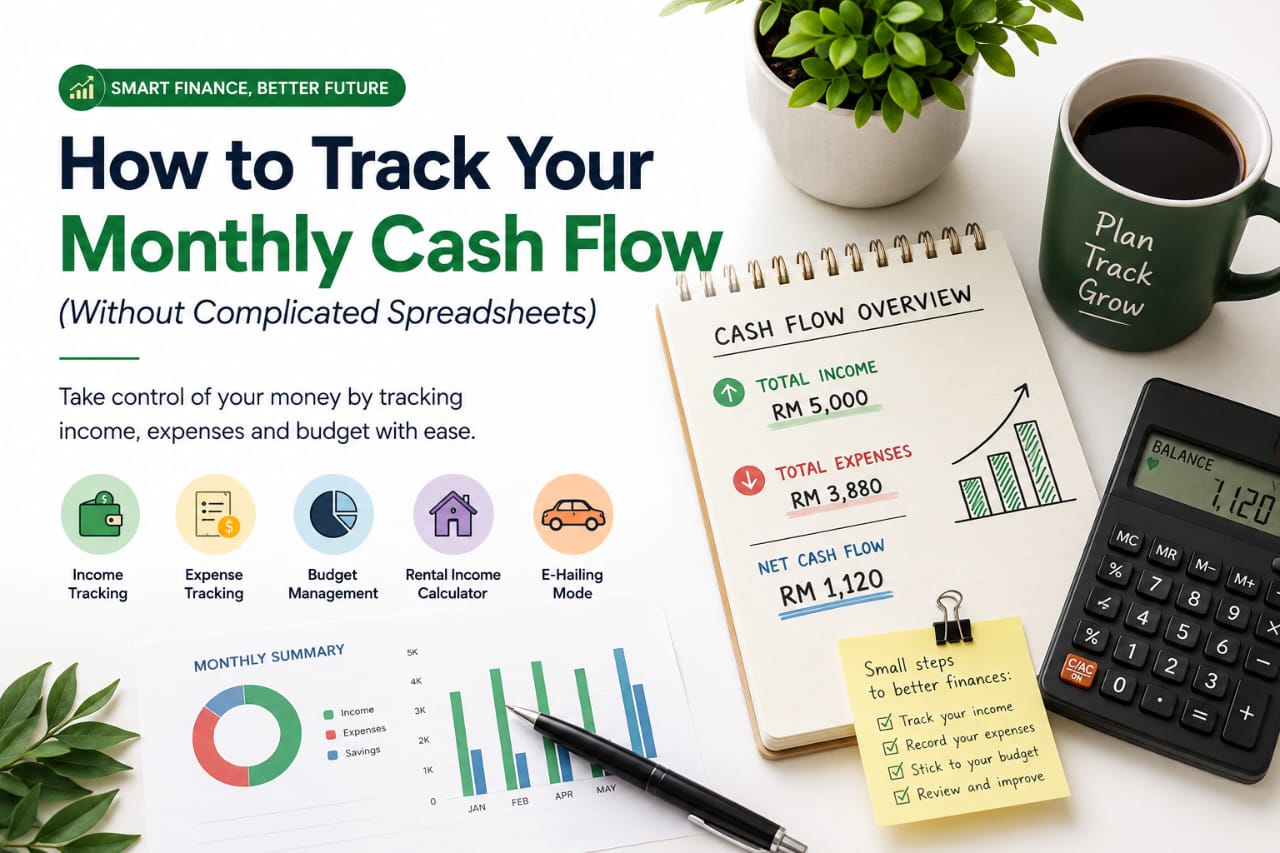
Cash flow is simply the money coming in versus the money going out. Your income could come from your salary, freelance work, rental income, or even e-hailing earnings. Your expenses include rent, food, fuel, bills, subscriptions, shopping, and everything else.
If more money comes in than goes out, you're moving in the right direction. If you're consistently spending more than you earn, it's a sign that your finances need attention.
2. Stop Looking Only at Your Bank Balance
One mistake many people make is checking only their bank balance. Seeing RM2,000 in your account doesn't explain where your money actually went.
Without tracking your spending, it's easy to think you're doing fine until your account suddenly runs low.
3. Don't Ignore Small Purchases
A RM6 coffee, a quick snack, or an online purchase might seem insignificant on its own. However, these small expenses can easily add up to hundreds of ringgit over the course of a month.
Tracking every expense—even the small ones—helps you identify spending habits that often go unnoticed.
4. Record Your Income and Expenses Regularly
Instead of trying to remember everything at the end of the month, spend just a few minutes each day recording your income and expenses.
Organise your spending into simple categories such as:
- 🍜 Food & Drinks
- ⛽ Transportation
- 🏠 Bills & Utilities
- 🎬 Entertainment
- 🛒 Shopping
By the end of the month, you'll clearly see where your money is going and which areas offer opportunities to save.
5. Use Tools That Make Tracking Easier
If you're looking for a simpler way to manage your finances, apps like LoNeX can help.
Instead of creating complicated spreadsheets, you can:
- Track your income
- Record daily expenses
- Manage monthly budgets
- Calculate rental income
- Monitor e-hailing earnings and vehicle expenses
- View your financial progress in one place
This allows you to spend less time managing spreadsheets and more time achieving your financial goals.
Final Thoughts
Managing your monthly cash flow isn't about earning the highest salary. It's about understanding where your money goes and making smarter financial decisions.
Small, consistent habits can make a huge difference over time.